The More Is Better Mistake in Packing Sports Kit
Packing sports kit with a session-first rule keeps your bag purposeful: take what the planned work needs, plus a small reserve for likely changes.
What actually belongs in your sports bag today? Packing sports kit is easier when you start with the session you plan to do, not with every item you own. A bag filled for every possible turn of events can be awkward to carry and harder to search; a purposeful one puts the useful things within reach and leaves the rest at home.
The decision is not simply “pack light”. Leaving out something essential can disrupt practice, while carrying several versions of the same item adds clutter without much value. The useful question is whether each item supports the planned activity, responds to a likely change, or solves a real problem created by the venue.
Start With The Session
Write down the shape of the session in plain language: indoor court work, outdoor running, a pool visit, a match, or a mixed training evening. Then note the surfaces, facilities and transitions involved. “Training” alone is too vague; “outdoor field practice followed by a bus ride home” gives you a better basis for choosing kit.
Sort possible items into three groups:
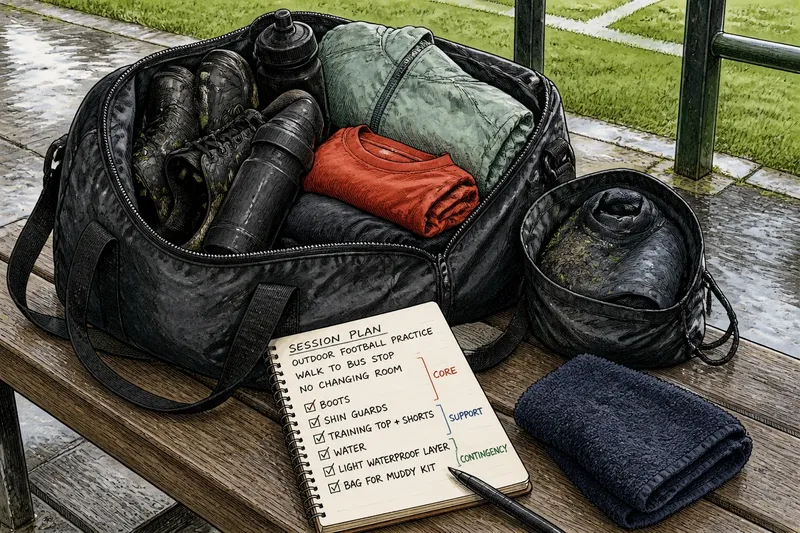
- Core: necessary for taking part, such as the required footwear, sport-specific clothing or a racket.
- Support: useful for comfort or organisation, such as a water bottle, towel or spare hair tie.
- Contingency: a backup for a change that is reasonably likely, such as a dry top when the session includes outdoor work in unsettled weather.
Core items go in first. Support items earn their place if they address a clear need. A contingency item belongs in the bag when the session plan, venue or journey makes that change plausible, not merely imaginable. That distinction keeps preparation sensible without pretending the day will follow a perfect script.
Choose By Situation
What fits a fixed indoor session?
For a session in a familiar, climate-controlled gym or hall, pack the equipment required for that activity, suitable clothing, water and any personal item you routinely need. A bulky rain layer, a second pair of trainers and a full change of clothes may not earn space if there is no outdoor travel or onward commitment.
Check the venue’s practical details rather than filling gaps with guesswork: will you need a padlock, court shoes or a towel? A small item can matter more than a spare outfit if the facility expects it. Keep the bag organised so footwear does not sit against clean clothing.
What fits outdoor training?
Outdoor sessions bring more uncertainty, but that does not mean every weather-related item belongs in the bag. Look at the planned location and the conditions you expect to encounter. A light outer layer may make sense for an exposed field or a cool journey; a second layer may not if you can leave the first in a locker or car.
Choose clothing that works with the activity, then add a modest backup for the most plausible change. If rain could affect both your warm-up and your trip home, a waterproof layer may be more useful than packing duplicate tops. Keep muddy or wet items separate with a reusable bag, so one contingency does not turn the rest of the kit into a mess.
What fits a match or event?
A match can involve kit rules, a longer wait and a sharper consequence if a required item is missing. Start with the event instructions: playing uniform, approved footwear, protective equipment and any team-specific item. Add only the support items that suit the schedule, such as a warm layer for waiting between play and a towel if the venue has washing facilities.
Separate “required to compete” from “nice to have”. A spare essential item can be sensible where a failure would stop participation and the item is easy to carry. Several alternatives for the same purpose are usually less useful than keeping the required kit accessible and clearly grouped.
What fits a mixed-activity day?
If a day includes more than one activity, pack by transition. Lay out what changes between them: perhaps one pair of shoes is unsuitable for the second venue, or a clean top is useful after a sweaty first session. A small packing cube or separate drawstring bag can keep the second activity’s kit clean and easy to find.
Do not pack a complete duplicate of everything by default. Identify the items that genuinely need to change and carry those. If the activities share a water bottle, towel or warm layer, one well-placed item may serve both, provided it remains clean and suitable for each use.
Use A Simple Rule
For each item, ask: Does the planned session require it, does a likely change make it useful, or does the venue make it necessary? If the answer is no to all three, leave it out. If the answer is yes, ask whether another item already serves the same purpose.
Say you have an evening of outdoor football practice, a walk to the bus stop and no changing room. You might pack boots, shin guards, training clothes, water, a light waterproof layer and a bag for muddy kit. A second pair of trainers and another complete outfit would add bulk without serving a clear part of that plan; if the weather forecast or travel arrangement changes, you can reassess those specific items.
This rule is deliberately tied to the day, not to a universal ideal bag. The same person may need a larger load for a tournament and a smaller one for a short technique session. A written list can help if you regularly switch sports, but keep separate lists for genuinely different session types rather than building one ever-growing master list.
What Should You Check?
Should I pack a spare pair of shoes?
Pack a second pair when the session requires a different surface, or when changing shoes is part of the planned transition. For a single familiar session, a spare pair may be unnecessary unless your venue or coach specifically requires it.
How much spare clothing belongs in my bag?
Choose clothing according to the session, weather exposure and what you will do afterwards. A clean top or warm layer can cover a clear need; several interchangeable outfits are harder to justify when there is no planned change.
Do I need every recovery accessory?
Bring an accessory if it has a defined role in your normal post-session routine and suits the setting. A foam roller, massage ball and resistance band need not all travel with you simply because each could be useful on some other day.
What if the session plan changes?
Pack for the most likely version of the day, then adjust when you receive new information. If a coach adds an activity, check what that activity actually requires instead of adding a broad collection of backup gear.
Make The Bag Easy
Clutter is not just about weight; it can hide the item you need at the moment you need it. Put core equipment in one consistent place, keep small essentials together in a pouch and isolate wet or dirty clothing. A simple layout makes a quick check easier before leaving and reduces rummaging at the venue.
After the session, remove used clothing and refill only what you have actually used. This is a good moment to notice a genuine gap: perhaps the bottle leaks, or the venue requires a lock you did not have. Add a replacement or a reminder for the next relevant session, rather than responding by packing several unrelated extras.
For protective equipment, uniforms and sport-specific items, follow the relevant label, manufacturer instructions, team requirements and local rules. Those requirements can differ by sport and venue, so treat them as part of the session plan rather than as optional padding.
Before you zip the bag, picture the session in order: arrival, warm-up, main activity, changing or travel afterwards. Put the essentials where that sequence can reach them, and leave the hypothetical emergencies behind unless one is genuinely likely. Packing sports kit becomes a clearer decision when every item has a job in the day ahead.